Covid Crisis: Pandemic Causes School Closures In Latin America
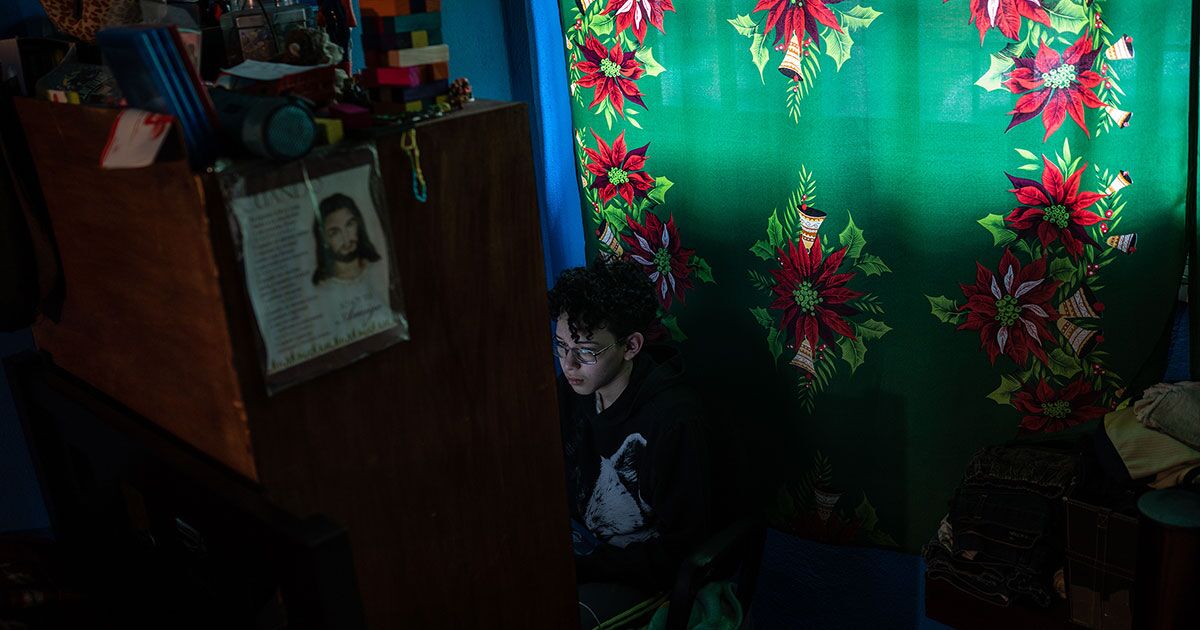
Judith Caballero Cruz has lost two close family members to Covid-19 this year. Now she fears the pandemic could take away something else: her children’s future. For the mother of two in Mexico City, the academic year that just finished was an unrelenting struggle—as it was for families all over the world. Parents and children have had it especially tough in Latin America, which has recorded the longest school closures of any region. By mid-June only eight countries—mostly small Caribbean islands—had managed to fully reopen their schools. Weeks of School Closures March 2020 to June 2021 Data: Unesco With schools in the Mexican capital mostly shuttered since Covid arrived, Caballero had to fight to keep her 14- and 8-year-old boys engaged in remote learning. She relied on her mobile phone package to keep them connected with online classes, until the responsibility for making funeral arrangements for her father and stepfather, and comforting fellow mourners, ate up all her monthly data as well as her emotional energy. She tried internet cafes—but social distancing restrictions on the number of patrons meant she couldn’t accompany either child inside. At her father’s house, she tuned into the TV channels where lessons were broadcast—but had to toggle between channels so both kids could keep up. Eventually she had to pay for two TVs and an internet connection at her own home. Together they cost about 850 pesos ($42) a month, a big chunk of the money she and her husband make selling secondhand clothes and electronics in street markets. And even that didn’t address the root of her problem. “My sons got very depressed in the pandemic when they called to tell me that my father was doing badly, that he was in a serious condition,” Caballero says. “The school environment has a big impact on them. They have a greater desire to study there, when they see other kids doing their work.” Schoolteacher Sulem Estrada Saldaña addresses her students. Photographer: Alejandro Cegarra/Bloomberg Globally, more than 800 million children have had their education disrupted by the pandemic this year, according to Unesco. In Latin America about 100 million are still affected by closures. As children fall behind, there’s a risk that economies will do the same. The World Bank estimates the interruption of schooling could translate into $1.7 trillion of lost future income in the region. Teachers often chafe at the idea that education should be measured in earnings. But Mexican educators such as Luis Martín Espino Méndez understand and share the concern underlying such statistics: that their students will drop out, with repercussions that will last the rest of their lives. Luis Martín Espino Méndez, a teacher in Mexico City, delivers lessons from his home. Photographer: Alejandro Cegarra/Bloomberg Espino, who teaches history at a public school in Mexico City, finished the academic year delivering lessons from his kitchen table. At that stage of a normal year, he’d have been telling his students about Mexico’s 19th century war of independence. Instead he got only as far as the Spanish conquest some three centuries earlier. Several of his students had told him they were ditching classes to work as mechanics, salesmen, or food vendors. It’s a problem across Latin America, which had succeeded in reducing the prevalence of child labor in the years before the Covid crisis. Now that trend has likely gone into reverse: According to the International Labour Organization, the number of school-age children who are working could rise by 9 million by the end of 2022. In Mexico, authorities estimate that 1.8 million students failed to return for the 2020-21 school year because of financial hardship or pandemic-related reasons. Espino’s school lost touch with about 40% of its students and struggled to figure out how to grade them. About half were awarded a pass after doing makeup exams, and the rest still have a chance during a remedial period at the start of the next school year, part of a national plan to prevent students from failing. Espino says the process has made him worry that students could come to see their education as merely a quest to obtain a piece of paper. “We have to think about the kinds of citizens we are forming, the type of people we are forming, and what we are teaching them,” he says. “We don’t want just a generation of automatons.” Students have had to adapt to a new learning style. Some stopped attending any classes at all but continued turning in homework—the bare minimum needed to pass—through WhatsApp or Facebook, or by hand-delivering their notebooks. While the national plan focused on televised classes, teachers in areas with internet access offered classes via videoconferencing platforms so they could interact with students. Fifteen-year-old Eduardo Mondragón Salgado, who wants to study aeronautics, says he’s barely left the house since Covid struck, because he’s asthmatic. He stopped joining his friends for soccer games and spends most of his days at a makeshift desk squeezed in at the foot of a bed. “There used to be moments when I got stressed about just being at home, and I used to go hang out with my friends, and that would make me calmer,” he says. Many teachers in Mexico City voted not to return to school in June, when authorities said public-health conditions had improved enough to make it feasible. They pointed out that some of their schools lack running water and only they, not their students, were vaccinated. Other states resumed classes only to suspend them again when case counts started to go back up. While studies have suggested that schools aren’t major sites of contagion, it’s hard for countries in Latin America to make classrooms safe. For starters, they’re overcrowded: An Inter-American Development Bank study found that class sizes across the region would have to be cut as much as 40% to achieve proper social distancing. And the pace of vaccine rollouts locally is lagging that in wealthier countries. It all added up to a risk that teachers didn’t want to take—even though they acknowledge the inadequacy of the online and televised substitutes. “All we can do is put Band-Aids on the problem and provide basic learning conditions,” says Sulem Estrada Saldaña, who teaches Spanish in Mexico City but made the decision not to return to in-person teaching when she was consulted by her school’s administrators in May. “We know the kids need far more than that.” Teachers say extra resources might be needed next academic year. Last month the government announced that the 2021-22 school year will be 10 days longer than usual, at 200 days, to try to make up for the material not covered last year. According to a national teachers’ union, Covid-19 has claimed the lives of at least 2,000 educators, which will make catching up more difficult. Parents have had to wrestle with the same dilemma that confronts teachers and school authorities: balancing the future costs of interrupted learning against health risks today. Eduardo’s aunt looks over class notes. Photographer: Alejandro Cegarra/Bloomberg Caballero says she’d been coming round to the idea of sending her kids back to school for a few days a week, but other parents and teachers voted against it. Rosa María Salgado Cabrera, Eduardo’s mom, wants him back in school only when he’s vaccinated. Mexico’s president says the whole adult population will have at least one shot by October, but there’s no timeline yet for teens and younger children. Salgado, who runs a breakfast stand in front of their home, has already seen one of her sons quit school, at age 16, when the family was saddled with unexpected medical bills because of her husband’s diabetes. She’s been shocked by the costs of remote learning, from textbook fees to lab supplies, that have forced other students to drop out. But she’s determined that won’t happen to her younger son. As for Eduardo, he insists he’s gearing up to return next semester, starting in August. “I just want to keep going, in school and in life,” he says. —With Maria Eloisa Capurro

Comments
Post a Comment