China's Crackdown on Tutors Won't Fix Its Schools
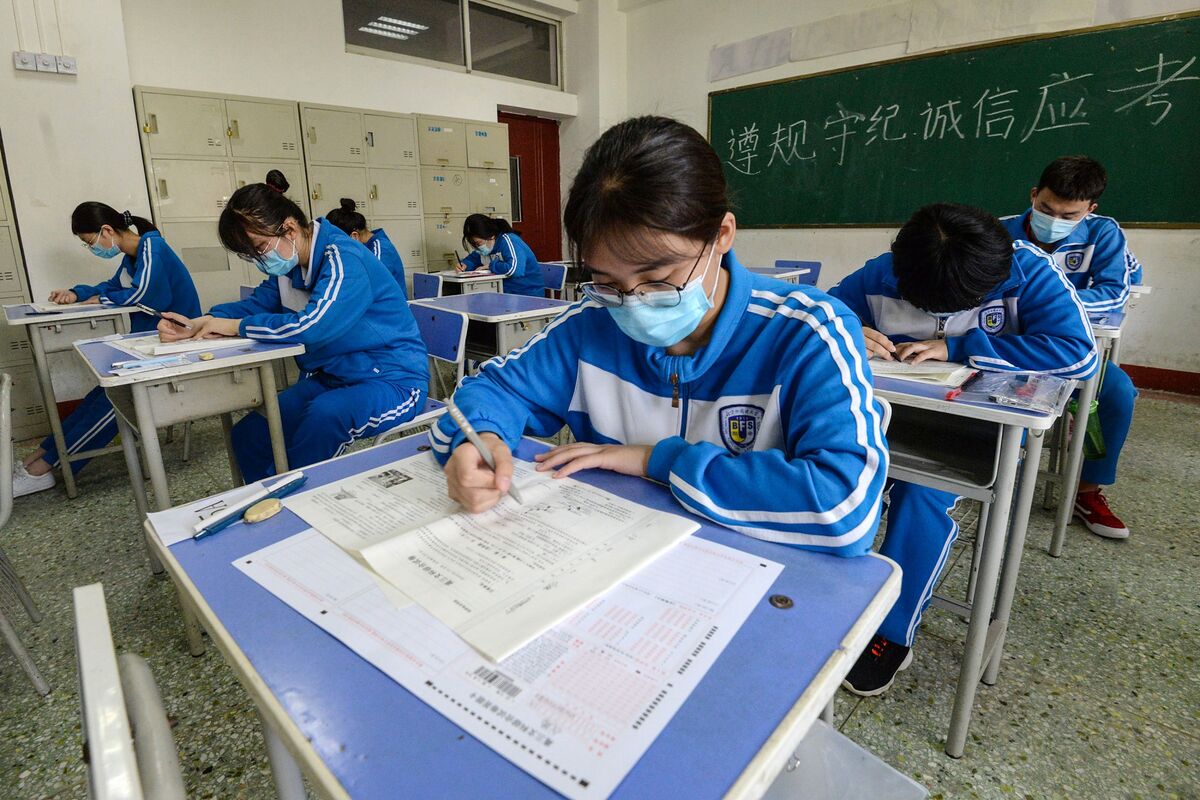
In late July, the Chinese government decreed that companies in the after-school tutoring industry could no longer make a profit, raise capital or go public. The goal was to reduce pressure on parents and children consumed by a fear of falling behind in China’s ultra-competitive education system. In time, officials hope, a more equitable system will encourage couples to have larger families and boost the country’s lagging population. These are worthy goals. But the government has misdiagnosed the problem. “Cram schools” are a rational response to a system that lacks the resources to meet the needs of an ambitious middle class. A ban will in all likelihood force the private industry underground, where wealthy parents will have the means to hire tutors. That will leave middle-class parents, already anxious about the future, priced out of one of the few services that they think will boost their children’s chances of success. In the 1990s, the Chinese government decided that it needed to expand access to higher education. Over the next three decades, it poured money into new colleges and universities, with seemingly spectacular results: Between 1998 and 2018, the population of Chinese undergraduates increased from 3.4 million to 28.3 million. The problem was that the quality of these new institutions varied greatly. A graduate of an elite urban university is now all but guaranteed a well-paying career; those who attend a lesser college will find the job market a challenge. The difference is profoundly important to Chinese parents, most of whom have no meaningful pension and must simply hope that their only child will make enough to support them in old age. Making matters worse, the government manages access to higher education via the gaokao, a notoriously difficult, life-defining college-entrance examination. It’s intended to be meritocratic, but success often depends on factors outside of a student’s control. Top universities often reserve more spaces for residents of Beijing and Shanghai, for example, thereby requiring students from the countryside — where resources, like teachers, are already limited — to achieve even higher scores than their urban peers. Understandably, most parents expect schools to teach to the gaokao, and they do. It’s not at all unusual to see classrooms full of six-year-olds practicing their standardized testing skills with the gaokao (or a high-school entrance exam) in mind. But when a single test defines a student’s — and a family’s — future prospects, trusting a flawed school system simply isn’t sufficient. Hence the rise of a lively (if mostly despised) network of private tutors and cram schools, an industry now worth about $100 billion. One recent survey found that 92% of Chinese parents enrolled their kids in extracurricular classes, at a cost of more than $1,500 a year. It’s a business sustained almost entirely by anxiety, which is one reason why many parents were happy about the government’s effective ban. Their relief won’t last. I know a U.S.-based tutor who offers virtual English lessons to mainland students for more than $45 an hour. As China’s crackdown continues, her rates and those of her peers will rise, including risk premiums for local tutors. Without access to legal tutoring, and hard-pressed to pay premium rates, China’s less affluent families risk falling further behind — with all the added stress that entails. For a glimpse of what’s to come, look to South Korea. In the 1970s, the country’s middle-class was in its own anxiety-inducing relationship with a rapidly expanding private tutoring industry. In 1980, the autocratic government of Chun Doo-hwan banned the practice. Almost immediately, a thriving black market emerged and the government was forced to reverse course. By 1996, Korean parents were spending $25 billion a year on private schooling, more than the state education budget. Meanwhile, the traditional school system has remained so infamously competitive — including make-or-break college entrance exams — that it’s been likened to “child abuse.” Absent serious reform, parents will continue to feel they have no choice but to subject their kids to it. If China follows a similar trajectory, as seems likely, its goals of reducing anxiety and inequality will almost certainly be thwarted. Fortunately, there’s a better way. Rather than banning private tutoring, the government should take steps like boosting the lagging pay of rural teachers, bolstering efforts to de-emphasize testing, expanding tuition subsidies for low-income families, and overhauling curriculums to focus less on memorization and more on critical thinking and in-demand skills. Such reforms won’t eliminate demand for private tutors, of course. But they might ease the belief among many Chinese that their kids don’t have an equal shot at success. For a government desperate for couples to have children, that’d be the way to prove it’s becoming pro-family. This column does not necessarily reflect the opinion of the editorial board or Bloomberg LP and its owners. To contact the author of this story: Adam Minter at aminter@bloomberg.net To contact the editor responsible for this story: Timothy Lavin at tlavin1@bloomberg.net

Comments
Post a Comment